


The Annual Pipeline Compliance Conference brings together engineers, managers, and technical specialists to examine the evolving landscape of high-pressure pipeline regulation and safety management. Its core purpose is to support operators in strengthening their compliance frameworks, sharing learning across the sector, and applying best-practice engineering principles to reduce major accident hazard risk. Through focused technical sessions, case studies, and practical insights, the conference provides a forum for discussing emerging challenges, aligning on industry expectations.
Join industry professionals in the breathtaking Lake District for a specialist pipeline compliance conference combining technical insight, collaboration, and a truly outstanding setting.
Delegate Fee:
£150 + VAT per attendee
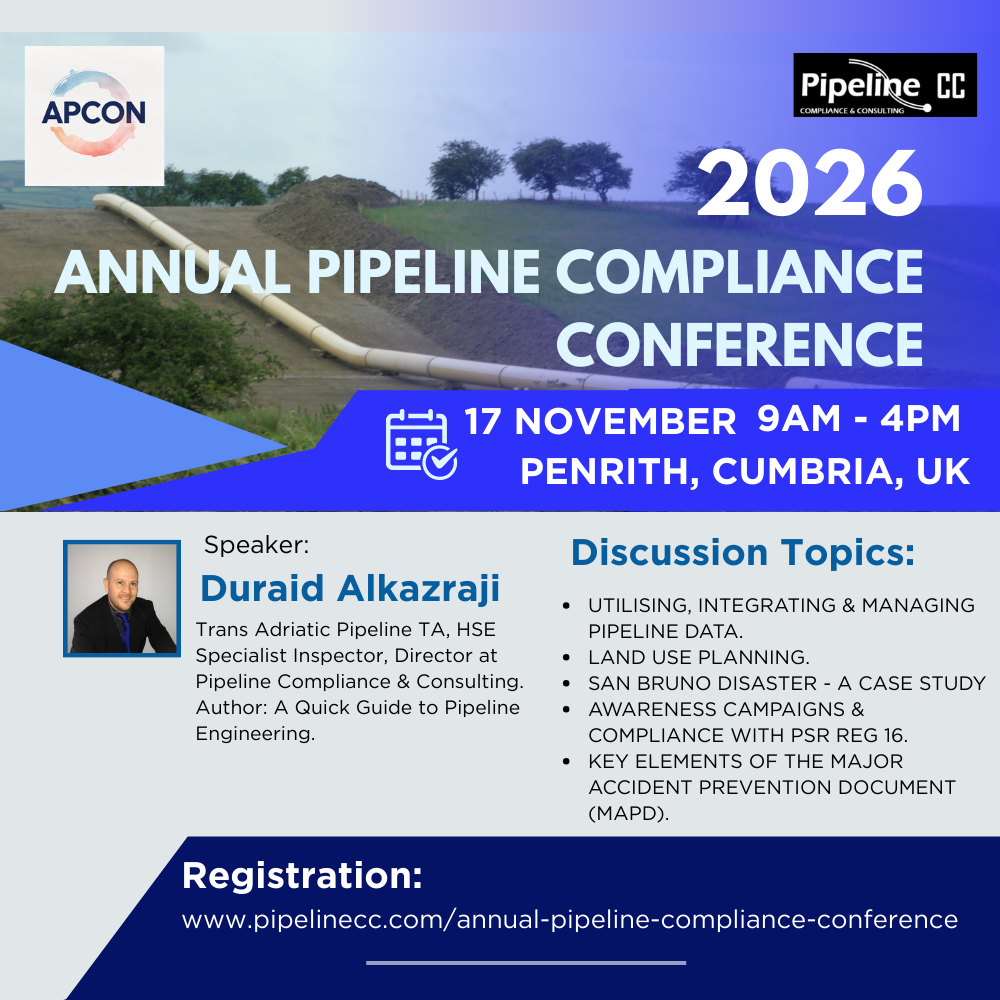
Agenda
Session 1: Utilising, Integrating & Managing Pipeline Data to Support Compliance
Session 2: Land Use Planning Around Major Accident Hazard Pipelines
Session 3: Incident Learning Lessons of previous Pipeline Failures. San Bruno – a case study
Session 4: How an effective Public Awareness Programme (API RP 1162) can support compliance with Regulation 16 of the Pipeline Safety Regulations
Session 5: What are the necessary elements of a Major Accident Prevent Document to support compliance with the Pipelines Safety Regulations 1996
Utilising, Integrating & Managing Pipeline Data to Support Compliance
Modern pipeline compliance increasingly depends on disciplined data management and the ability to integrate information from integrity assessments, operational monitoring, geospatial systems, and inspection programmes. This session examines practical approaches for consolidating disparate datasets into a reliable, auditable framework that supports regulatory obligations and enhances engineering decision-making. Attendees will explore methods to improve data quality, traceability, and interoperability, enabling more robust risk evaluation and more efficient demonstration of compliance across the asset lifecycle.
Land Use Planning Around Major Accident Hazard Pipelines
Effective land use planning is essential to controlling societal risk around high-pressure pipelines and ensuring that new developments remain compatible with pipeline safety requirements. This session will examine how operators, planners and duty holders must comply with existing legislation requirements, consultation zones, and hazard assessment methodologies to inform planning decisions and safeguard existing assets. Attendees will gain insight into best-practice engagement with planning authorities, assessing development proposals, and ensuring that land use changes do not erode pipeline integrity or increase major accident hazard risk.
Incident Learning Lessons of previous Pipeline Failures. San Bruno – a case study
Understanding the root causes of past failures is critical to strengthening today’s pipeline safety regimes. This session provides a focused examination of the 2010 San Bruno pipeline rupture, analysing the technical, organisational, and regulatory shortcomings that contributed to the incident. Attendees will explore key learnings related to asset records, material verification, emergency response, and safety management systems, with a view to applying these insights to their own high-pressure pipeline operations.
How an effective Public Awareness Programme (API RP 1162) can support compliance with Regulation 16 of the Pipeline Safety Regulations.
Regulation 16 of the Pipeline Safety Regulations requires operators to ensure that those who may be affected by a pipeline understand the associated risks and necessary precautions. This session explores how applying API RP 1162 principles can elevate stakeholder engagement, improve third-party damage prevention, and strengthen an operator’s overall safety management system.
What are the core elements of a Major Accident Prevent Document to support compliance with the Pipelines Safety Regulations 1996.
A robust Major Accident Prevention Document is central to demonstrating that an operator has systematically identified, assessed, and controlled the risks associated with high-pressure pipelines. This session will outline the key components of an effective MAPD, including hazard identification methodologies, major accident scenarios, risk evaluation, organisational arrangements, and performance monitoring.
Event Registration Application
Event Registration Disclaimer
1. Attendance & Registration
By submitting this form, you request a place at the Pipeline Compliance Conference. As spaces are limited to approximately 30 delegates, registration will be confirmed on a first-come, first-served basis. Registrations are subject to organiser confirmation. Payment details will be provided once your delegate place has been confirmed. The organiser will notify you if you have a confirmed place or have been placed on the waiting list.
2. Cancellations & Non-Attendance
As this is a registration only event with restricted numbers, if you are no longer able to attend you agree to notify the organiser as early as possible so your place can be offered to another delegate. The organiser reserves the right to reallocate your place if you do not confirm attendance when requested or if you fail to respond to essential event communications.
3. Programme Changes
The organiser may amend the event agenda, speakers, timing, or venue at any time. Any significant changes will be communicated to confirmed delegates.
4. Limitation of Liability
The organiser will take reasonable steps to ensure a safe and well-run event but accepts no liability for any loss, damage, injury, or costs arising from attendance, including travel or accommodation expenses. Delegates attend at their own risk and are responsible for their own insurance where appropriate.
5. Data Protection
Personal data submitted in this form will be used solely for managing your registration, communicating essential event information, and (if you give consent) future marketing communication about related events. All data will be processed in accordance with UK GDPR and our Privacy Policy.
6. Photography & Recording
The event may be photographed, filmed, or live-streamed. By attending, you consent to the use of these images for event summaries and promotional purposes unless you opt out by notifying the organiser.
7. Code of Conduct
Delegates are expected to behave respectfully and professionally. The organiser reserves the right to refuse entry or remove any attendee whose behaviour is disruptive, unsafe, or inappropriate.
8. Technical Disclaimer
Technical, engineering, regulatory, or compliance information presented at the event is provided for general guidance only. It does not constitute legal, engineering, or professional advice. Delegates should obtain appropriate expert advice before acting on any information provided.